


Impact of Abiotic Stresses on In Vitro Production of Secondary Metabolites
- Authors: Inês Mansinhos1, Sandra Gonçalves2, Anabela Romano3
-
View Affiliations Hide Affiliations1 MED Mediterranean Institute for Agriculture, Environment and Development & CHANGE Global Change and Sustainability Institute, Faculdade de Cincias e Tecnologia, Universidade do Algarve, Campus de Gambelas, Faro, Portugal 2 MED Mediterranean Institute for Agriculture, Environment and Development & CHANGE Global Change and Sustainability Institute, Faculdade de Cincias e Tecnologia, Universidade do Algarve, Campus de Gambelas, Faro, Portugal 3 MED Mediterranean Institute for Agriculture, Environment and Development & CHANGE Global Change and Sustainability Institute, Faculdade de Cincias e Tecnologia, Universidade do Algarve, Campus de Gambelas, Faro, Portugal
- Source: In Vitro Propagation and Secondary Metabolite Production from Medicinal Plants: Current Trends (Part 1) , pp 62-90
- Publication Date: February 2024
- Language: English


Impact of Abiotic Stresses on In Vitro Production of Secondary Metabolites, Page 1 of 1
< Previous page | Next page > /docserver/preview/fulltext/9789815165227/chap4-1.gif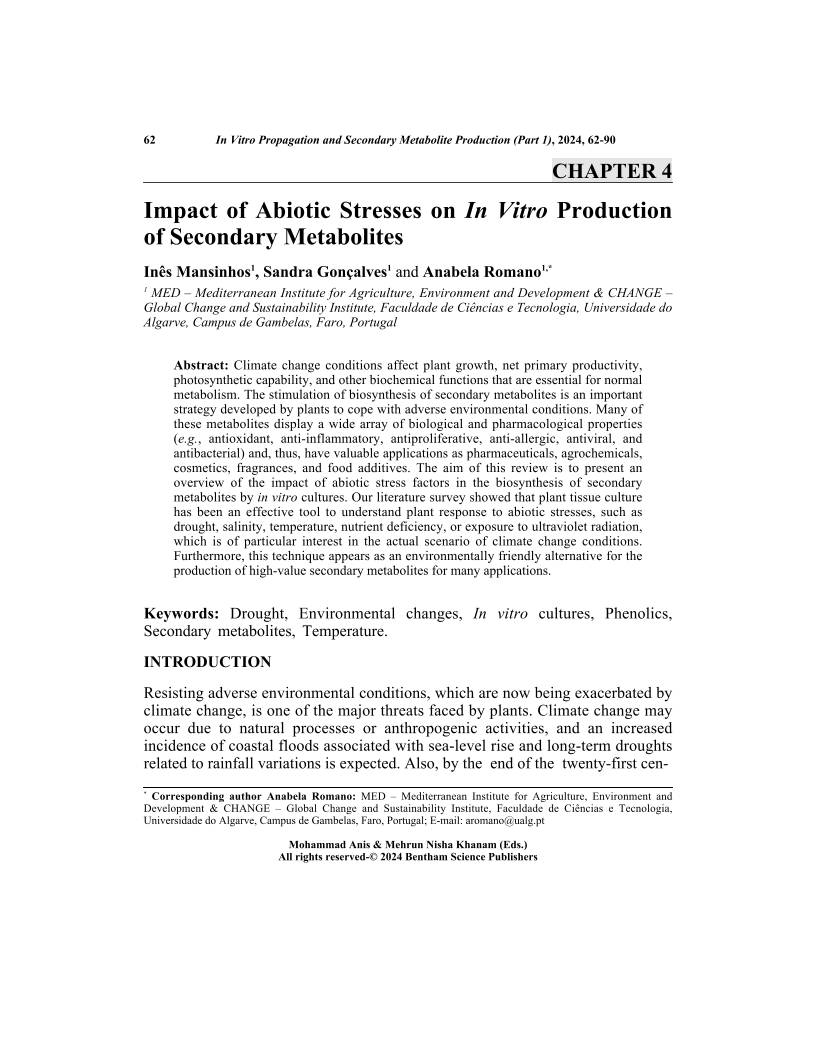
Climate change conditions affect plant growth, net primary productivity, photosynthetic capability, and other biochemical functions that are essential for normal metabolism. The stimulation of biosynthesis of secondary metabolites is an important strategy developed by plants to cope with adverse environmental conditions. Many of these metabolites display a wide array of biological and pharmacological properties (e.g., antioxidant, anti-inflammatory, antiproliferative, anti-allergic, antiviral, and antibacterial) and, thus, have valuable applications as pharmaceuticals, agrochemicals, cosmetics, fragrances, and food additives. The aim of this review is to present an overview of the impact of abiotic stress factors in the biosynthesis of secondary metabolites by in vitro cultures. Our literature survey showed that plant tissue culture has been an effective tool to understand plant response to abiotic stresses, such as drought, salinity, temperature, nutrient deficiency, or exposure to ultraviolet radiation, which is of particular interest in the actual scenario of climate change conditions. Furthermore, this technique appears as an environmentally friendly alternative for the production of high-value secondary metabolites for many applications.
-
From This Site
/content/books/9789815165227.chap4dcterms_subject,pub_keyword-contentType:Journal -contentType:Figure -contentType:Table -contentType:SupplementaryData105
